
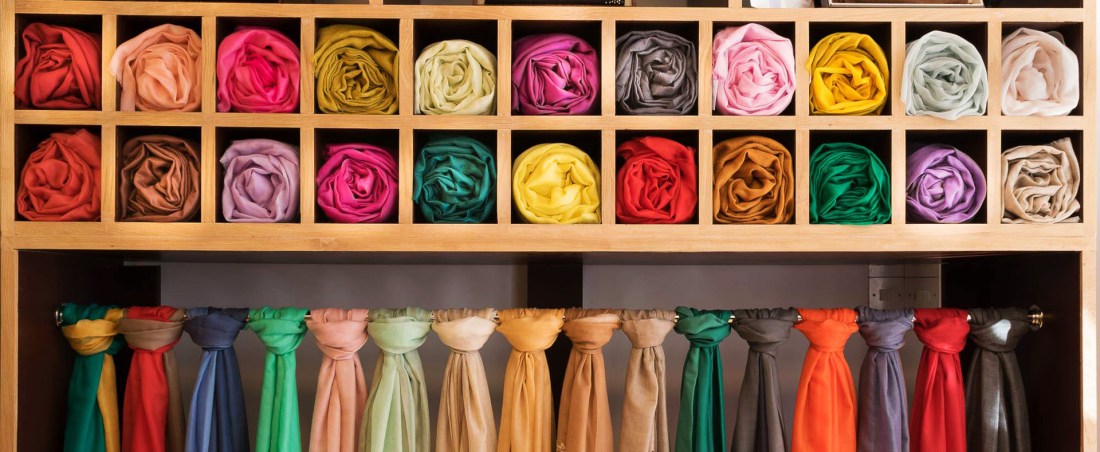
Pashmina which is often referred to as Cashmere (In West) is the epitome of luxury and a status symbol that everyone desires to have. The word Pashmina sounds like royalty in itself. For years the gorgeous and elegant Pashmina accessories have been the statement of class for the elite. From Bollywood stars to the royalty of England, Pashmina
has earned its way in the closet of all. It is one of the demanded apparels by women in the world. Owning a genuine Pashmina is a dream of all women. Its elegance can transform any dress into a head turner and can make any lady stand tall. Throughout history kings, queens and other nobility were the only ones who could afford to have shawls and accessories made from this ultra-luxurious fabric.
Now Where does this luxury come from? Where can we buy the authentic Pashmina ? and most significantly How do we know if it’s pure and original? These are some of the questions that concern all Pashmina lovers. In this article of ours, we have tried to answer these questions to the best of our knowledge. So let’s get started.What Is Pashmina?
The word Pashmina has derived from the Persian word “Pashm” which literally means “soft gold”. Pashmina is the finest of cashmere wools available in the world and it took from a goat named Chanthangi (Capra hircus). The goat is native to the Himalayan mountain Ranges and is also found in China and Mongolia. To protect itself against the cold of 15100 feet above the sea level, Chanthangi develops the plushest wools and when the summer comes there is no other way but to shed the same. The goat sheds the wool by rubbing itself against the rocks and shrubs leaving behind fine short haired fleece. It is this shredded wool which is then collected by the shepherd and sold worthfully. Although pashmina produces in many regions across the Himalayas, it is Kashmiri Pashmina, which regards as the finest of all. Having a range of 12-13 μ (microns) and a fiber length of 55 to 60 mm it is this finesse which lends it its rarity and earns it a special place in the world of luxury fashion.
The wool which received in Kashmir then goes through thorough processes of cleaning, spinning, and weaving and evolves into the luxury wrap or accessory. The Pashmina making in Kashmir started in the 15th century by a prominent Muslim scholar named Mir Sayyid Ali Hamadani when he came with about 700 craftsmen from parts of Persia. He visited Ladakh for the first time where he found that the Ladakhi goats produced soft wool. He took some wool and made socks out of it and gave them as a gift to the king of Kashmir, Sultan Kutabdin. Afterward Shah-e-Hamdan suggested to the king that they start a shawl weaving industry in Kashmir using this wool. Ever since Pashmina making has been the most celebrated craft of Kashmir. Passed from generation to generation of skillful artisans, it takes the diligent effort of 33 workers to make a Pashmina Shawl. From hand spinning to hand weaving, the wrap undergoes meticulous processes which make it what it is – a piece of luxury. Coping with the ever-evolving fashion trends, the industry has kept its pace at par. Today we see not only the pashmina wraps in demand but other accessories as well like sweaters, scarves, pocket squares & socks however shawls are the most dominating one. To enhance the elegance of Pashmina, many wraps embroidered upon by hand using the needle which doubles the luxury quotient. The two most elaborate embroideries of Kashmir – Sozni and Tilla Kari have become an ally to it and adds to the grandiose it exhibits.
This Answer the first question for us regarding the origin of Pashmina and where it comes from.The authenticity of Pashmina and Its Certification.
Moving onto the next quest, how do we know if the pashmina is real or not? Do they come with any certification for the buyers to be sure?
First thing first, passing through the Ring, which is the general notion for testing authenticity, does not in any way prove that it is a pure Cashmere Pashmina. The RING TEST, as per the pashmina makers is absolutely faux. So what is the real mark of authenticity? We are here with the answer all are looking for. The authentic pashmina which made from pure cashmere wool comes with a certification seal. The government gives the seal to a recognized institution where the pashmina undergoes certain tests and if all passed, it qualifies for the certification mark, since the best of pashmina comes from Kashmir we have chosen it for further elaboration.

 Best online store to buy certified cashmere pashmina shawls